
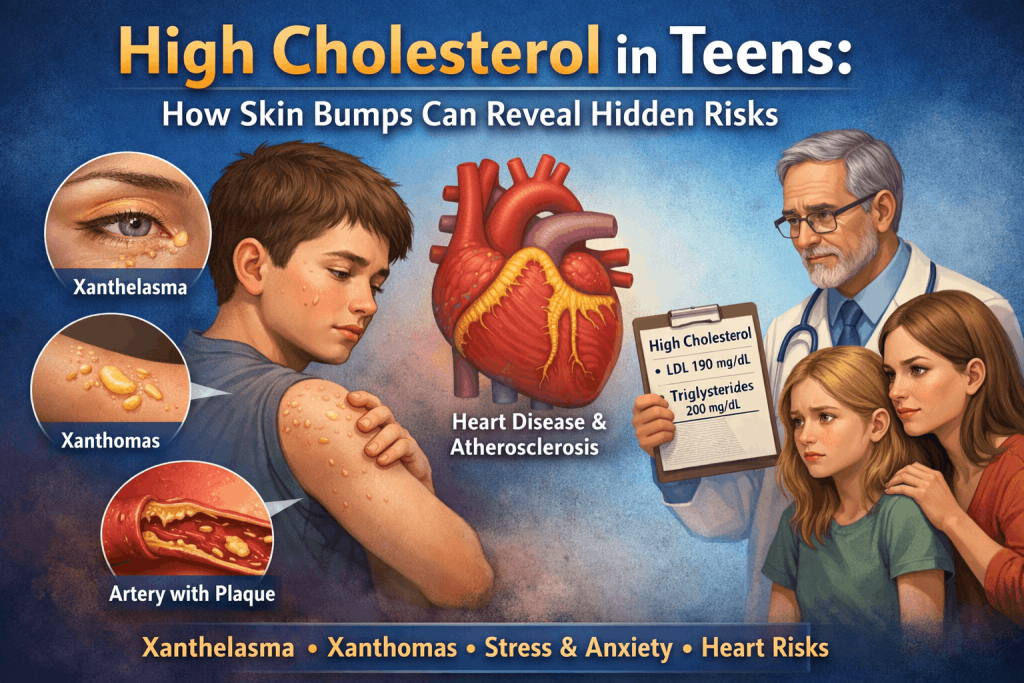
As a parent, nothing prepares you for the moment you notice something unusual on your teenager’s skin. It starts innocently—a tiny bump on the arm, a small yellowish nodule near the eye, or a few raised spots that seem harmless. I remember vividly the day I noticed a cluster of small bumps on my 15-year-old daughter’s skin, shortly after her HPV vaccination. At first, I thought it was just a reaction to the shot or a minor teen skin condition. Little did I know, these seemingly innocuous skin bumps were a window into a deeper, potentially serious health issue high cholesterol in teens.
This discovery was a journey of education, concern, and action, and in sharing it, I hope to guide other parents and caregivers to recognize the subtle signs that might otherwise be overlooked.
Understanding Teen Skin Bumps: What’s Normal and What’s Concerning
Teenagers undergo rapid hormonal changes, growth spurts, and shifts in their immune system—all of which can manifest as skin changes. However, certain bumps can indicate underlying health problems rather than just acne or irritation.
Skin Bumps After the HPV Shot
Many parents notice tiny bumps on the arm or under the skin after the HPV vaccination, medically referred to as HPV shot teens bump under skin after shot. These bumps are usually benign and represent a mild inflammatory reaction or a small localized immune response. They often resolve on their own over a few weeks.
However, in rare cases, if bumps persist, enlarge, or appear yellowish, hard, or clustered, it may indicate a systemic issue rather than just a reaction to the injection. This is where attention to skin condition teen tiny bumps becomes important.
Common Types of Teen Skin Bumps
- Acne Vulgaris:
The most common teen skin condition, acne results from hormonal changes that increase sebum production. Acne may appear as pimples, whiteheads, blackheads, or cystic nodules. - Genetic Skin Bumps:
Conditions like sims 2 teen skins that support the baby bump in simulation games highlight the social visibility of skin concerns, but in real life, hereditary traits like keratosis pilaris (tiny bumps on arms and thighs) can manifest during adolescence. - Hormonal or Stress-Related Bumps:
Teenagers under chronic stress or experiencing sleep deprivation may develop small papules or pustules due to altered immune and hormonal regulation. - Medical Causes:
Persistent, firm, yellowish bumps can indicate cholesterol-related issues like xanthomas. These are lipid deposits that sometimes occur in teens with hyperlipidemia (high cholesterol) or familial hypercholesterolemia, a hereditary form of high cholesterol.
Hyperlipidemia and Familial Hypercholesterolemia: The Hidden Culprit
Hyperlipidemia is the medical term for elevated levels of lipids (fats) in the blood, primarily cholesterol and triglycerides. While often associated with adults, it can occur in children and teens, particularly those with a genetic predisposition.
What Is Familial Hypercholesterolemia?
Familial hypercholesterolemia (FH) is a hereditary condition where the liver is unable to remove low-density lipoprotein (LDL, often called “bad cholesterol”) efficiently from the bloodstream. This can lead to premature cardiovascular disease and noticeable skin manifestations.
Key points:
- LDL cholesterol levels in teens with FH can exceed 190 mg/dL, far above normal pediatric ranges.
- If left untreated, FH increases the risk of early atherosclerosis, heart attacks, and strokes, sometimes even in teenagers.
- FH often presents with skin signs such as xanthomas (yellowish cholesterol deposits on the elbows, knees, or tendons) and xanthelasma palpebrarum (cholesterol deposits around the eyelids).
Skin Clues: How High Cholesterol Shows Up in Teens
Skin changes are sometimes the first noticeable sign of elevated cholesterol in young people. Here’s what parents and caregivers should look for:
- Xanthomas: Firm, yellowish nodules typically appearing on elbows, knees, hands, or Achilles tendons.
- Xanthelasma Palpebrarum: Soft yellow deposits around the eyelids.
- Cholesterol Bumps: Raised bumps under the skin that may resemble acne but are firm and painless.
- High Cholesterol Skin Rash Pictures: Occasionally, diffuse yellowish plaques or plaques on joints may appear.
- Hereditary High Cholesterol Indicators: Family history, along with these dermatological signs, is a red flag.
These signs are subtle but significant. My teen’s small bumps under her arm initially seemed trivial until a pediatric dermatologist pointed out the characteristic cholesterol deposits around eyes and tendons, prompting us to check her blood lipid profile.
How High Cholesterol Affects Teens
High cholesterol in youth is not just a cosmetic concern; it’s a systemic problem with long-term implications.
Risk Factors
- Genetics: Family history of FH or premature heart disease.
- Diet: High intake of saturated fats, sugary foods, and processed meals.
- Sedentary Lifestyle: Lack of physical activity contributes to lipid abnormalities.
- Chronic Stress and Anxiety: Mental health challenges like stress and cholesterol, insomnia, and chronic anxiety can exacerbate lipid dysregulation.
Symptoms
- Often asymptomatic initially, earning high cholesterol the nickname “silent condition.”
- Heart Disease Skin Warning Signs: Skin manifestations may be the only visible symptom.
- Fatigue, leg pain on exertion (due to narrowed arteries), and chest discomfort may occur if vascular changes begin early.
The Interplay Between Stress, Sleep, Mood, and Cholesterol
Chronic anxiety, stress, and insomnia don’t just affect mental health—they influence lipid metabolism. Elevated cortisol levels can increase LDL cholesterol and triglycerides while reducing HDL (“good cholesterol”). Teens under constant school stress may develop more skin bumps on teen skin, and acne can flare as a result of hormonal and immune changes.
Understanding this mind-body connection is vital. Managing stress and improving sleep can help regulate both skin and cardiovascular health.
Frequently Asked Questions
Can High Cholesterol Cause Acne or Itchy/Dry Skin?
High cholesterol itself rarely causes acne. However, lipid metabolism disorders can lead to skin dryness, itchiness, and firm yellowish bumps (xanthomas).
What Are the Skin Signs of High Cholesterol in Females and Children?
- Yellowish nodules on elbows, knees, and joints.
- Soft yellow plaques on eyelids (xanthelasma).
- Occasionally, subtle rashes or thickened skin on tendons.
How Do Cholesterol Deposits Around the Eyes Form?
Cholesterol accumulates in the dermis of eyelids, forming soft, yellowish plaques. They can be removed safely via dermatological procedures such as laser therapy or excision. Some home remedies (like topical garlic or onion pastes) are popular but less effective and can irritate skin.
How to Identify Ten Skin Signs of Heart Disease Linked to Cholesterol
- Xanthomas on elbows/knees
- Xanthelasma around eyes
- Yellowish bumps on fingers or toes
- Thickened Achilles tendons
- Arcus cornealis (white or gray ring around cornea)
- Sudden skin rashes with yellow plaques
- Painless nodules on hands
- Skin bruising more easily
- Skin tightening on joints
- Persistent acne or follicular eruptions in conjunction with other signs
What Is the Normal Cholesterol Level for Children and Teens?
- Total cholesterol: <170 mg/dL
- LDL cholesterol: <110 mg/dL
- HDL cholesterol: >45 mg/dL
- Triglycerides: <90 mg/dL
Persistent elevations warrant evaluation by a pediatrician or lipid specialist.
How School-Related Stress Might Trigger Skin Breakouts
High stress levels increase cortisol, leading to overactive sebaceous glands. Sleep deprivation and poor diet during stressful periods amplify acne and other skin manifestations.
Medical Treatment for Pediatric High Cholesterol
Lifestyle and Dietary Interventions
- Emphasize fruits, vegetables, whole grains, lean proteins
- Reduce saturated fats and trans fats
- Encourage regular physical activity
Statin Medications
For teens with persistent high LDL or familial hypercholesterolemia, doctors may prescribe statins such as rosuvastatin.
Considerations:
- Monitor for liver enzyme changes and muscle aches
- Be aware of potential interactions with medications for anxiety or insomnia
- Side effects can include fatigue, GI upset, and rare cognitive complaints
Other Therapies
- Bile acid sequestrants
- Ezetimibe (cholesterol absorption inhibitor)
Lifestyle Advice for Managing Cholesterol and Improving Skin Health
- Balanced Diet: Rich in fiber, low in saturated fats
- Regular Exercise: At least 60 minutes daily for teens
- Stress Management: Yoga, meditation, or journaling
- Sleep Hygiene: Aim for 8–10 hours per night
- Regular Screening: Annual lipid panels, especially for teens with family history
By addressing cholesterol naturally, skin manifestations like cholesterol bumps, xanthomas, or high cholesterol skin rash pictures often improve, and cardiovascular risk is lowered.
Conclusion
Recognizing high cholesterol in teens through subtle skin cues is crucial for early intervention. My personal journey began with tiny bumps after an HPV vaccination but revealed a deeper issue: familial hypercholesterolemia. With timely medical evaluation, lifestyle modifications, and, in some cases, statin therapy, teens can live healthier, longer lives while preventing early cardiovascular events.
Parents should watch for skin bumps on teen, yellowish deposits, or unusual rashes, and seek guidance from healthcare professionals. Awareness, proactive care, and stress management form the cornerstone of protecting both skin and heart health in young people.

