
Cholesterol is one of those health topics that almost everyone has heard about—but very few people fully understand. You might recall a doctor mentioning your “numbers,” or maybe you’ve read headlines warning about “bad cholesterol.” But what does it all actually mean for your day-to-day life? In this guide on Cholesterol myths vs facts, we’ll break everything down in a clear, friendly, and practical way. No confusing medical jargon—just real explanations, real science, and real advice you can use.
What Is Cholesterol, Really?
Let’s start with the basics.
Cholesterol is a waxy, fat-like substance found in your blood. It’s not inherently “bad”—in fact, your body needs it to:
- Build healthy cells
- Produce hormones
- Support digestion (via bile acids)
- Maintain cell membranes
Think of cholesterol like oil in a car engine. You need it to keep things running smoothly—but too much, or the wrong kind, can cause problems.
The Two Main Types: LDL vs HDL
Understanding cholesterol starts with knowing the difference between its two main types:
LDL (Low-Density Lipoprotein) – “Bad” Cholesterol
- Carries cholesterol to your arteries
- High levels can lead to plaque buildup
- Increases risk of heart disease and stroke
HDL (High-Density Lipoprotein) – “Good” Cholesterol
- Removes excess cholesterol from the bloodstream
- Transports it back to the liver for disposal
- Helps protect your heart
Simple analogy:
LDL is like a delivery truck dropping off cholesterol, while HDL is the cleanup crew taking excess away.
Why Cholesterol Matters
When cholesterol levels become unbalanced—especially when LDL is high—it can lead to plaque buildup in arteries. This condition, called atherosclerosis, narrows blood vessels and restricts blood flow.
Over time, this can increase the risk of:
- Heart attacks
- Stroke
- High blood pressure
So cholesterol itself isn’t the villain—it’s the imbalance that causes trouble.
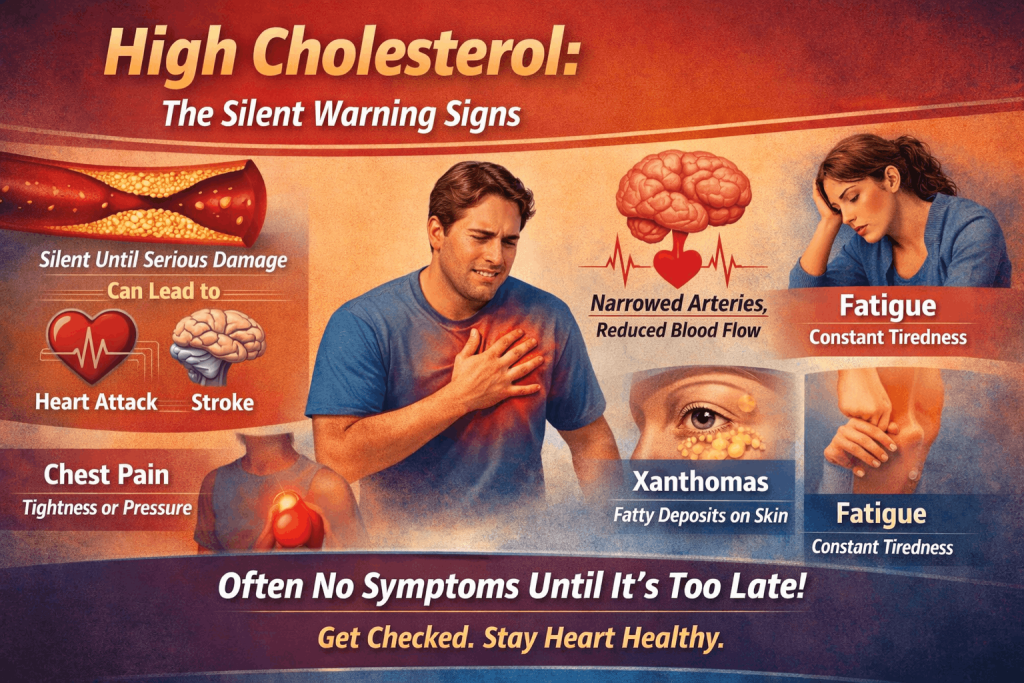
Symptoms of High Cholesterol: The Silent Warning Signs
Cholesterol Myths vs Facts
Let’s clear up some of the most common misconceptions.
Myth 1: All Cholesterol Is Bad
Fact: Your body needs cholesterol to function properly.
This is one of the biggest misunderstandings. Cholesterol isn’t the enemy—your body actually produces it naturally because it’s essential.
What matters is:
- The balance between LDL and HDL
- Overall cholesterol levels
- Lifestyle factors
Takeaway: Focus on balance, not elimination.
Myth 2: Only Overweight People Have High Cholesterol
Fact: Anyone can have high cholesterol—even people who look healthy.
You might be surprised to learn that:
- Genetics play a major role
- Thin or fit individuals can still have high LDL
- Lifestyle habits matter more than appearance
This is why routine blood tests are important.
Myth 3: Eating Cholesterol-Rich Foods Is the Main Problem
Fact: Saturated and trans fats have a bigger impact than dietary cholesterol.
For years, foods like eggs were blamed. But modern research shows:
- Dietary cholesterol has a smaller effect on blood cholesterol
- Saturated fats (like those in processed foods) raise LDL more
Example:
- Eggs → generally safe in moderation
- Processed snacks → more harmful due to unhealthy fats
Myth 4: If You Feel Fine, Your Cholesterol Is Fine
Fact: High cholesterol often has no symptoms.
This is why it’s often called a “silent condition.”
You won’t feel:
- Pain
- Discomfort
- Warning signs
Until complications arise.
Takeaway: Regular check-ups are essential—even if you feel perfectly healthy.
Myth 5: Medication Is the Only Solution
Fact: Lifestyle changes can significantly improve cholesterol levels.
Medication can be helpful, but it’s not always the first step. Many people can manage cholesterol through:
- Diet improvements
- Regular exercise
- Weight management
- Stress reduction
In some cases, these changes can reduce or delay the need for medication.
Myth 6: All Fats Are Bad for Cholesterol
Fact: Some fats actually improve cholesterol levels.
Healthy fats can:
- Increase HDL
- Reduce LDL
Examples include:
- Avocados
- Nuts
- Olive oil
- Fatty fish
The key is choosing the right types of fat.
Myth 7: Young People Don’t Need to Worry
Fact: Cholesterol buildup can begin early in life.
Even teenagers and young adults can have elevated cholesterol levels, especially if they have:
- Poor diet habits
- Sedentary lifestyles
- Family history of high cholesterol
Early awareness leads to better long-term health.
Myth 8: Cutting Out All Fat Will Fix Cholesterol
Fact: Extremely low-fat diets can sometimes do more harm than good.
Your body needs fat for:
- Brain function
- Hormone production
- Energy
The goal isn’t to eliminate fat—it’s to choose healthier sources.
Myth 9: Natural Remedies Alone Can Cure High Cholesterol
Fact: Natural approaches can help—but they’re not always enough.
Things like:
- Fiber-rich foods
- Plant sterols
- Herbal supplements
Can support cholesterol management—but severe cases may still require medical treatment.
Always consult a healthcare provider for guidance.
Myth 10: Once You Lower Cholesterol, You’re Done
Fact: Cholesterol management is a lifelong process.
Your levels can change based on:
- Diet
- Activity level
- Age
- Stress
Consistency matters more than quick fixes.
What Really Works: Evidence-Based Strategies
Now that we’ve covered cholesterol myths vs facts, let’s focus on what actually works.
1. Eat a Heart-Healthy Diet
Focus on:
- Fruits and vegetables
- Whole grains
- Lean proteins
- Healthy fats
Limit:
- Processed foods
- Trans fats
- Excess sugar
Simple tip: Fill half your plate with vegetables.
2. Increase Fiber Intake
Soluble fiber helps reduce LDL cholesterol.
Good sources include:
- Oats
- Beans
- Apples
- Lentils
Fiber acts like a sponge, absorbing excess cholesterol and removing it from your body.
3. Stay Physically Active
Exercise can:
- Raise HDL
- Lower LDL
- Improve overall heart health
Aim for at least:
- 30 minutes of moderate activity most days
Even walking counts.
4. Maintain a Healthy Weight
Losing even a small amount of weight can:
- Lower LDL
- Improve HDL
- Reduce heart disease risk
It’s not about perfection—just steady progress.
5. Quit Smoking
Smoking lowers HDL and damages blood vessels.
Quitting can:
- Improve cholesterol levels
- Reduce heart disease risk
- Improve overall health
6. Limit Alcohol
Moderation is key.
Too much alcohol can:
- Raise triglycerides
- Increase calorie intake
7. Manage Stress
Chronic stress can indirectly affect cholesterol through:
- Poor eating habits
- Lack of exercise
- Hormonal changes
Try:
- Meditation
- Deep breathing
- Regular breaks
8. Follow Medical Guidance
If lifestyle changes aren’t enough, your doctor may recommend medication such as statins.
These can:
- Lower LDL
- Reduce heart disease risk
The goal is not just lower numbers—but better long-term health.
Understanding Current cholesterol myths vs facts Guidelines
Health experts generally recommend:
- Total cholesterol: Below 200 mg/dL
- LDL (“bad”): Below 100 mg/dL (lower for high-risk individuals)
- HDL (“good”): 40 mg/dL or higher
However, these numbers may vary depending on your:
- Age
- Medical history
- Risk factors
This is why personalized care matters.
Practical Everyday Tips
Let’s make this actionable.
Start small:
- Swap fried foods for grilled options
- Replace sugary snacks with fruit
- Add one extra vegetable to meals
Build habits:
- Walk after meals
- Drink more water
- Cook at home more often
Stay consistent: cholesterol myths vs facts
- Progress matters more than perfection
Cholesterol: Truth vs. Myth Balanced Perspective
One of the most important lessons from cholesterol myths vs facts is this:
Health isn’t about extremes.
It’s not about:
- Eliminating entire food groups
- Following strict, unsustainable diets
- Chasing quick fixes
It’s about:
- Balance
- Consistency
- Informed choices
Conclusion
When it comes to cholesterol myths vs facts, the truth is both simple and empowering.
Cholesterol itself isn’t the enemy—imbalance is.
What really works is:
- Understanding the difference between LDL and HDL
- Making sustainable lifestyle changes
- Staying consistent over time
- Seeking medical advice when needed
Forget the myths and focus on what science supports:
- A balanced diet
- Regular activity
- Healthy habits
By taking small, steady steps, you can protect your heart and improve your overall well-being.
And most importantly—you don’t need to be perfect. You just need to be informed and consistent.

