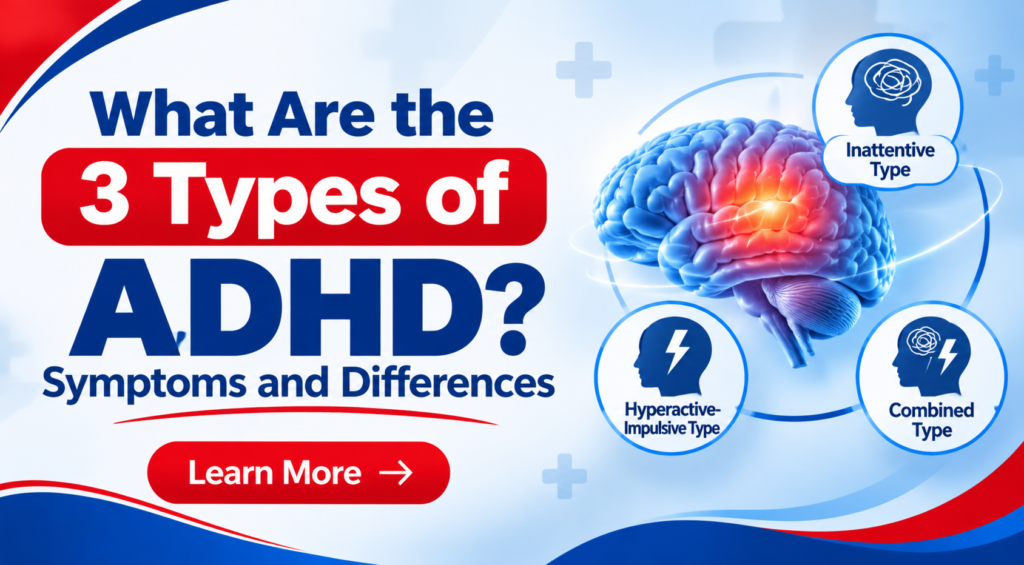
Attention-Deficit/Hyperactivity Disorder (ADHD) is a common neurodevelopmental condition that affects how people pay attention, manage impulses, regulate activity levels, and organize everyday tasks. Although ADHD is often associated with children, it can also affect teenagers and adults. However, not everyone experiences ADHD in the same way. Some people struggle mainly with concentration and organization, while others experience hyperactivity and impulsive behavior. Some individuals experience a combination of both. So, what are the different types of ADHD, and how can you recognize their symptoms?
ADHD is generally classified into three main presentations: predominantly inattentive, predominantly hyperactive-impulsive, and combined. Understanding these presentations can help individuals and families recognise possible symptoms and seek appropriate professional support.
In this guide, we will explore the three types of ADHD, their symptoms, differences, diagnosis, and available treatment options.
What Is ADHD?
Attention-Deficit/Hyperactivity Disorder (ADHD) is a neurodevelopmental disorder that affects brain functions associated with attention, impulse control, activity levels, and executive functioning.
People with ADHD may experience difficulties with:
-
- Maintaining attention during conversations or activities.
-
- Completing tasks and following instructions.
-
- Managing time and staying organized.
-
- Controlling impulsive behaviors.
-
- Sitting still or managing restlessness.
-
- Remembering appointments and everyday responsibilities.
ADHD symptoms can vary from person to person. Some individuals experience more difficulty with attention, while others struggle with hyperactivity and impulsivity.
ADHD is not a sign of laziness, poor discipline, or a lack of intelligence. It is a recognised medical condition that can affect different aspects of everyday life.
What Are the Three Main Types of ADHD?
According to established diagnostic classifications, ADHD has three main presentations. These are based on the symptoms an individual experiences.
Let’s understand each type in detail.
1. Predominantly Inattentive ADHD
Predominantly inattentive ADHD is characterized by difficulties with concentration, attention, organisation, and completing tasks.
People with this presentation may find it challenging to stay focused, follow instructions, remember important information, or manage everyday responsibilities.
Because hyperactivity may not be particularly noticeable, this type of ADHD can sometimes go unrecognized.
Common Symptoms of Inattentive ADHD
Some common symptoms include:
-
- Difficulty paying attention to details.
-
- Making careless mistakes in schoolwork or professional tasks.
-
- Struggling to maintain focus during conversations.
-
- Frequently losing personal belongings.
-
- Forgetting appointments or daily responsibilities.
-
- Having difficulty organizing tasks and activities.
-
- Avoiding tasks that require prolonged mental effort.
-
- Becoming easily distracted by unrelated thoughts or external activities.
-
- Frequently forgetting instructions or leaving tasks unfinished.
How Does Inattentive ADHD Affect Daily Life?
Inattentive ADHD can affect different areas of everyday life.
For example, a child may struggle to complete homework despite understanding the subject. An adult may frequently miss deadlines, forget meetings, or find it difficult to manage multiple responsibilities.
People with inattentive ADHD may also experience frustration because they want to complete tasks but struggle to maintain focus and organization.
2. Predominantly Hyperactive-Impulsive ADHD
Predominantly hyperactive-impulsive ADHD involves excessive physical activity, restlessness, and difficulty controlling impulses.
People with this presentation may find it challenging to remain seated, wait for their turn, or think before acting.
Although hyperactivity is often more noticeable in children, it may appear differently in adults. For example, adults may experience internal restlessness, constant movement, or difficulty relaxing.
Common Symptoms of Hyperactive-Impulsive ADHD
Some common symptoms include:
-
- Frequently moving hands or feet.
-
- Fidgeting or struggling to remain seated.
-
- Talking excessively.
-
- Interrupting conversations.
-
- Difficulty waiting in queues or taking turns.
-
- Acting without considering the consequences.
-
- Frequently feeling restless.
-
- Struggling to participate quietly in activities.
-
- Having difficulty controlling immediate reactions.
How Does Hyperactive-Impulsive ADHD Affect Daily Life?
Hyperactive-impulsive ADHD may affect social interactions, academic performance, and workplace responsibilities.
For instance, a child may frequently interrupt classroom discussions or struggle to remain seated during lessons.
An adult may find it difficult to wait during conversations, make impulsive decisions, or feel uncomfortable sitting through long meetings.
With appropriate support and management strategies, individuals can learn ways to manage these challenges.
3. Combined Presentation ADHD
Combined presentation of ADHD involves symptoms of both inattentiveness and hyperactivity-impulsivity.
This means an individual experiences difficulties with attention and organisation alongside restlessness and impulsive behavior.
It is not a completely separate condition. Rather, it is a presentation of ADHD in which symptoms from both categories are present.
Common Symptoms of Combined ADHD
Individuals with combined presentation ADHD may experience:
-
- Difficulty maintaining concentration.
-
- Frequently forgetting instructions or responsibilities.
-
- Trouble organizing everyday activities.
-
- Excessive talking or interrupting others.
-
- Restlessness and frequent fidgeting.
-
- Difficulty waiting for their turn.
-
- Acting impulsively.
-
- Struggling to complete tasks.
-
- Becoming easily distracted.
How Does Combined ADHD Affect Daily Life?
Combined ADHD can create challenges in multiple areas of life.
For example, a student may struggle to concentrate during lessons, forget homework assignments, and find it difficult to remain seated.
An adult may experience difficulties managing work responsibilities, staying organized, controlling impulsive reactions, and maintaining attention during meetings.
However, symptoms and their impact differ from one person to another.
What Is the Difference Between the Three Types of ADHD?
Understanding the differences between ADHD presentations can help individuals recognise how symptoms may appear.
Here is a simple comparison:
| ADHD presentation | Main characteristics |
|---|---|
| Predominantly inattentive | Difficulty focusing, forgetfulness, and disorganization |
| Predominantly hyperactive-impulsive | Restlessness, excessive talking, and impulsive behavior |
| Combined presentation | Symptoms of both inattentiveness and hyperactivity-impulsivity |
It is important to remember that ADHD symptoms exist on a spectrum of individual experiences. Two people with the same presentation may have very different challenges and support needs.
How Do ADHD Symptoms Differ in Children and Adults?
ADHD can affect people at different stages of life. However, symptoms may look different depending on a person’s age, environment, and responsibilities.
ADHD Symptoms in Children
Children with ADHD may experience:
-
- Difficulty paying attention in class.
-
- Frequently forgetting school materials.
-
- Struggling to complete homework.
-
- Excessive talking or physical movement.
-
- Interrupting teachers or classmates.
-
- Difficulty following instructions.
-
- Challenges with classroom routines.
These difficulties may affect academic performance, friendships, and family relationships.
ADHD Symptoms in Adults
In adults, ADHD symptoms may become more noticeable in professional and personal responsibilities.
Common experiences include:
-
- Difficulty managing time.
-
- Frequently missing deadlines.
-
- Forgetting appointments.
-
- Struggling with organization.
-
- Difficulty completing work assignments.
-
- Impulsive spending or decision-making.
-
- Restlessness and difficulty relaxing.
-
- Challenges maintaining attention during conversations.
ADHD does not necessarily disappear with age. Symptoms may change as people grow older, and some individuals may develop strategies that help them manage their challenges.
What Causes Different Types of ADHD?
There is no single known cause of ADHD. Research suggests that genetic, neurological, and developmental factors contribute to the condition.
Some factors associated with ADHD include:
1. Genetic Factors
Genetics plays an important role in ADHD. The condition often runs in families, and individuals with close relatives who have ADHD may have a higher likelihood of developing it.
2. Brain Development and Functioning
Research suggests that ADHD is associated with differences in brain development and functioning, particularly in areas involved in attention, planning, motivation, and impulse control.
3. Environmental and Developmental Factors
Certain prenatal and early-life factors, such as premature birth and exposure to some harmful substances during pregnancy, have been associated with an increased likelihood of ADHD.
However, these factors do not independently determine whether someone will develop ADHD.
It is also important to understand that parenting style, excessive screen time, or eating sugar does not independently cause ADHD.
How Is Each Type of ADHD Diagnosed?
ADHD cannot be diagnosed through a simple online quiz or by identifying one or two symptoms.
A qualified healthcare professional, such as a psychiatrist, psychologist, or other appropriately trained clinician, conducts an assessment to determine whether someone meets the diagnostic criteria.
The evaluation may include:
-
- Reviewing current symptoms and medical history.
-
- Understanding childhood behaviour and developmental history.
-
- Gathering information from parents, teachers, or family members when appropriate.
-
- Assessing symptoms across different environments.
-
- Considering whether symptoms affect everyday functioning.
-
- Evaluating other conditions that may cause similar symptoms.
For an ADHD diagnosis, symptoms must meet established diagnostic criteria, have an appropriate developmental history, occur in more than one setting, and cause meaningful impairment.
The assessment also helps determine which ADHD presentation best describes the individual’s current symptoms.
What Are the Treatment Options for Different Types of ADHD?
Although ADHD does not have a single universal treatment, several approaches can help individuals manage symptoms and improve their quality of life.
Treatment plans are personalised according to age, symptoms, individual needs, and other health considerations.
1. Medication
Healthcare professionals may recommend ADHD medications to help manage symptoms.
These may include stimulant and non-stimulant medications. The appropriate option depends on the individual’s circumstances and should be discussed with a qualified healthcare professional.
2. Behavioural Therapy
Behavioural therapy can help individuals develop strategies to manage daily challenges.
It may focus on:
-
- Improving organisational skills.
-
- Building healthy routines.
-
- Managing impulsive behaviour.
-
- Developing emotional regulation strategies.
-
- Improving time management.
3. Cognitive Behavioural Therapy (CBT)
Cognitive Behavioural Therapy may help some individuals with ADHD manage negative thought patterns, emotional difficulties, and challenges associated with everyday responsibilities.
4. Lifestyle and Daily Routine Changes
Healthy lifestyle habits can complement professional ADHD treatment.
Helpful strategies may include:
-
- Following a structured daily routine.
-
- Breaking larger tasks into smaller steps.
-
- Using calendars and reminders.
-
- Engaging in regular physical activity.
-
- Creating an organised and less distracting environment.
Lifestyle changes are supportive strategies rather than substitutes for appropriate medical care.
5. Educational and Workplace Support
Children may benefit from appropriate classroom accommodations, additional learning support, and structured instructions.
Adults may benefit from workplace adjustments such as written instructions, flexible scheduling, task-management tools, and reduced distractions where possible.
Can Someone Have More Than One Type of ADHD?
ADHD is classified into three presentations, but an individual does not have to fit into one fixed category throughout their lifetime.
The combined presentation includes symptoms of both inattentiveness and hyperactivity-impulsivity.
Additionally, an individual’s ADHD presentation can change over time. For example, someone who previously met the criteria for combined presentation may later meet the criteria for predominantly inattentive presentation if their hyperactive-impulsive symptoms become less prominent.
This does not necessarily mean ADHD has disappeared. It reflects changes in the symptoms that meet diagnostic criteria.
When Should You Seek Professional Help?
It may be helpful to seek a professional evaluation if attention difficulties, impulsivity, or hyperactivity consistently interfere with everyday life.
Consider consulting a qualified healthcare professional if you or your child experiences:
-
- Persistent difficulty concentrating.
-
- Frequent forgetfulness and disorganisation.
-
- Challenges completing everyday tasks.
-
- Ongoing restlessness or impulsive behaviour.
-
- Difficulties at school, work, or home.
-
- Problems maintaining relationships due to attention or impulse-control difficulties.
Early identification and appropriate support can help individuals better understand their experiences and develop effective management strategies.
Remember that experiencing some ADHD-like symptoms does not automatically mean someone has ADHD. A professional assessment is necessary for an accurate diagnosis.
Frequently Asked Questions About the Different Types of ADHD
1. What are the three main types of ADHD?
The three main ADHD presentations are predominantly inattentive, predominantly hyperactive-impulsive, and combined presentation. Each is characterised by a different pattern of attention, hyperactivity, and impulsivity symptoms.
2. Which type of ADHD is most common?
Combined presentation is frequently reported in clinical populations, but the distribution of ADHD presentations varies depending on age, population, and how individuals are assessed. There is no single universal ranking that applies to everyone.
3. What is the difference between ADD and ADHD?
ADD (Attention Deficit Disorder) is an older term that was commonly used to describe attention difficulties without prominent hyperactivity. Today, ADHD is the accepted diagnostic term, and predominantly inattentive presentation describes this symptom pattern.
4. Can adults develop ADHD?
ADHD is a neurodevelopmental condition that begins during childhood, although it may not be recognised or diagnosed until adulthood. Adults can receive an ADHD diagnosis when their developmental history and current symptoms meet the diagnostic criteria.
5. Can ADHD change from one type to another?
Yes. ADHD presentations can change over time as symptoms develop, become less noticeable, or affect individuals differently. A healthcare professional can reassess the current presentation.
6. Is inattentive ADHD harder to recognise?
It can be harder to recognise because individuals may not display obvious hyperactivity. Instead, symptoms such as forgetfulness, daydreaming, disorganisation, and difficulty concentrating may be more noticeable.
7. Can someone have both inattentive and hyperactive ADHD symptoms?
Yes. This is known as combined presentation ADHD. Individuals experience symptoms from both the inattentive and hyperactive-impulsive categories.
8. Is ADHD treatable?
Yes. ADHD can be managed through appropriate treatment and support, including medication, behavioural therapy, psychological interventions, lifestyle strategies, and educational or workplace accommodations.
Final Thoughts
Understanding the different types of ADHD is an important step towards recognising how this neurodevelopmental condition affects individuals differently.
The three main presentations—inattentive, hyperactive-impulsive, and combined—each involve distinct patterns of symptoms. While some people primarily struggle with concentration and organisation, others experience restlessness and impulsive behaviour, while some experience both.
ADHD does not define a person’s intelligence, potential, or abilities. With an accurate diagnosis, appropriate treatment, and the right support, individuals with ADHD can develop effective strategies to manage everyday challenges and improve their quality of life.
If you recognise persistent ADHD-related symptoms in yourself or someone you care about, consider speaking with a qualified healthcare professional for an appropriate assessment.