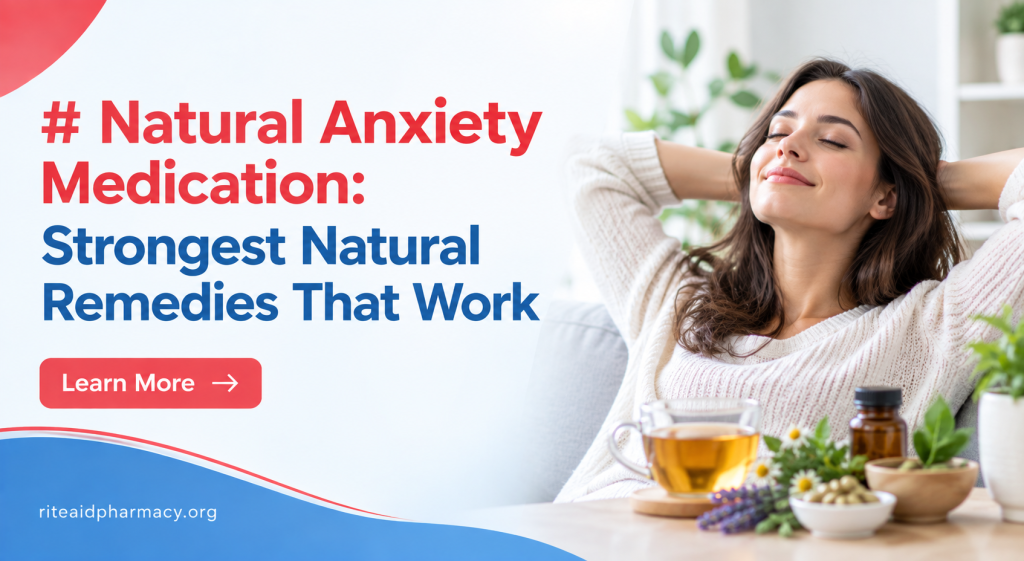
Natural anxiety medication is a common search term for people looking for non-prescription ways to manage stress, worry, and anxiety symptoms. While natural remedies cannot replace proven treatments for serious anxiety disorders, some supplements, therapies, and lifestyle approaches may help reduce symptoms when used appropriately. Natural products are not medications in the same sense as prescription drugs, and none consistently match the effectiveness of evidence-based treatments such as cognitive behavioral therapy (CBT) or selective serotonin reuptake inhibitors (SSRIs). However, some natural supplements and lifestyle approaches have shown meaningful benefits in clinical studies.
This guide reviews the natural options with the strongest scientific evidence, explains how they work, and discusses their safety.
Quick Answer
If you’re looking for the strongest natural options supported by research, the evidence is generally strongest for:
| Natural option | Evidence for anxiety | Overall assessment |
|---|---|---|
| Ashwagandha | Moderate | One of the best-studied herbal supplements for stress-related anxiety |
| Lavender (oral extract) | Moderate | Good evidence for generalized anxiety symptoms |
| Cognitive behavioral therapy (non-drug) | Very strong | Most effective natural, non-medication treatment |
| Regular exercise | Strong | Proven to reduce anxiety over time |
| Mindfulness meditation | Strong | Effective for many people with mild to moderate anxiety |
| Magnesium (only if deficient) | Limited to moderate | May help some individuals |
| Chamomile | Moderate | Mild benefit in some studies |
| L-theanine | Limited | May promote relaxation without significant sedation |
The strongest natural anxiety medication options depend on the cause and severity of anxiety. Evidence suggests that some herbal supplements, such as ashwagandha and lavender extract, may provide support, while therapy and lifestyle changes often have stronger long-term benefits.
Key Takeaways
- No natural supplement is as consistently effective as first-line medical treatments for anxiety disorders.
- Ashwagandha and oral lavender extracts have among the strongest evidence among herbal supplements.
- Exercise, mindfulness, adequate sleep, and psychotherapy often provide greater long-term benefits than supplements alone.
- “Natural” does not automatically mean safe. Herbal supplements can interact with medications and may not be appropriate during pregnancy or for certain medical conditions.
- Always discuss supplements with a healthcare professional, especially if you take prescription medications or have chronic medical conditions.
What Is Anxiety?
Anxiety is the body’s natural response to stress. It becomes a medical concern when excessive worry, fear, or nervousness is persistent, difficult to control, and interferes with work, school, relationships, or daily activities.
Common symptoms include:
- Excessive worrying
- Restlessness
- Racing thoughts
- Muscle tension
- Rapid heartbeat
- Trouble sleeping
- Difficulty concentrating
- Irritability
- Fatigue
- Digestive discomfort
Occasional anxiety is normal. Anxiety disorders involve symptoms that are more frequent, persistent, and impairing.
What Makes a Natural Anxiety Medication Effective?
Researchers evaluate natural treatments based on:
- High-quality randomized clinical trials
- Systematic reviews and meta-analyses
- Safety data
- Consistency of benefits across studies
- Biological mechanisms that support effectiveness
Many supplements have promising early research but lack enough large, well-designed studies to support broad recommendations.
Which Natural Anxiety Medication Is Strongest?
1. Ashwagandha
Overall evidence: Moderate
Ashwagandha (Withania somnifera) is an adaptogenic herb widely studied for stress and anxiety.
How it may work
Research suggests it may:
- Help regulate the body’s stress response
- Lower cortisol levels in some individuals
- Improve resilience to chronic stress
- Promote relaxation
Potential benefits
Studies have reported:
- Reduced perceived stress
- Lower anxiety scores
- Better sleep quality
- Improved overall well-being
Benefits often appear after 6–12 weeks of regular use.
Possible side effects
Most are mild and include:
- Stomach upset
- Sleepiness
- Diarrhea
- Headache
Who should avoid it?
Avoid or use only with medical advice if you:
- Are pregnant
- Have autoimmune diseases
- Have thyroid disorders
- Have liver disease
- Take sedatives or certain thyroid medications
Rare cases of liver injury have been reported.
2. Oral Lavender Extract
Overall evidence: Moderate
Not all lavender products are the same. Most research has evaluated standardized oral lavender oil preparations rather than aromatherapy.
Potential benefits
Clinical studies suggest it may:
- Reduce generalized anxiety symptoms
- Improve sleep
- Reduce nervousness
- Produce fewer side effects than many prescription medications
Side effects
Possible effects include:
- Mild stomach upset
- Burping
- Headache
Lavender essential oil should not be swallowed unless it is a product specifically formulated for oral use.
3. Chamomile
Overall evidence: Moderate
Chamomile has long been used as a calming herb.
Research suggests it may modestly improve symptoms of generalized anxiety, particularly in people with mild to moderate symptoms.
Benefits
- Gentle calming effect
- May improve sleep
- Generally well tolerated
Side effects
Rare but possible:
- Allergic reactions, especially in people allergic to ragweed, daisies, or chrysanthemums
4. Magnesium
Overall evidence: Limited to moderate
Magnesium is involved in hundreds of biochemical reactions affecting nerve and muscle function.
People with low magnesium levels may notice improvements after correcting a deficiency.
Benefits
Possible improvements include:
- Muscle relaxation
- Better sleep
- Reduced stress
- Mild anxiety reduction
Evidence is less convincing in people who already have normal magnesium levels.
Side effects
High doses may cause:
- Diarrhea
- Abdominal cramping
- Low blood pressure (rare)
People with kidney disease should not take magnesium supplements without medical supervision.
5. L-Theanine
Overall evidence: Limited
L-theanine is an amino acid naturally found in green tea.
Research suggests it may:
- Promote relaxation
- Reduce stress responses
- Improve attention without causing significant drowsiness
It may be helpful for occasional stress rather than severe anxiety disorders.
6. Omega-3 Fatty Acids
Overall evidence: Limited to moderate
Some studies suggest omega-3 fatty acids may help reduce anxiety symptoms, particularly in people with chronic stress or certain psychiatric conditions.
Benefits appear modest and are not consistent across all studies.
7. Lemon Balm
Overall evidence: Emerging
Lemon balm has shown calming effects in small studies.
Potential benefits include:
- Reduced nervousness
- Improved sleep
- Mild stress reduction
Larger studies are still needed.
Natural Approaches That Often Work Better Than Supplements
Several non-drug strategies have stronger scientific support than many supplements.
Regular Exercise
Exercise is one of the most consistently effective natural treatments for anxiety.
Benefits include:
- Lower stress hormones
- Increased endorphins
- Improved mood
- Better sleep
- Enhanced resilience
Aim for:
- At least 150 minutes of moderate exercise each week
- Strength training twice weekly
Even brisk walking can make a meaningful difference.
Cognitive Behavioral Therapy (CBT)
CBT is considered one of the most effective treatments for anxiety disorders.
It helps people:
- Identify unhelpful thinking patterns
- Reduce avoidance behaviors
- Build healthier coping skills
- Prevent relapse
Unlike supplements, CBT often provides lasting improvements after treatment ends.
Mindfulness Meditation
Research supports mindfulness for reducing:
- General anxiety
- Stress
- Rumination
- Emotional reactivity
Regular practice is more effective than occasional sessions.
Good Sleep Habits
Poor sleep and anxiety reinforce each other.
Helpful habits include:
- Keeping a consistent bedtime
- Limiting caffeine later in the day
- Reducing evening screen exposure
- Maintaining a cool, quiet sleep environment
Breathing Techniques
Slow breathing can reduce activation of the body’s stress response.
Examples include:
- Box breathing
- Diaphragmatic breathing
- 4-6 breathing (inhale for 4 seconds, exhale for 6 seconds)
These techniques may help during episodes of acute anxiety.
Which Natural Option Is Strongest?
Based on current evidence:
| Rank | Natural option | Evidence strength |
|---|---|---|
| 1 | Cognitive behavioral therapy | Very strong |
| 2 | Regular exercise | Strong |
| 3 | Mindfulness meditation | Strong |
| 4 | Ashwagandha | Moderate |
| 5 | Oral lavender extract | Moderate |
| 6 | Chamomile | Moderate |
| 7 | Magnesium (if deficient) | Limited to moderate |
| 8 | L-theanine | Limited |
| 9 | Lemon balm | Emerging |
For many people, combining healthy lifestyle habits with evidence-based therapy is more effective than relying on supplements alone.
Safety Considerations
Natural supplements can still cause side effects and interact with medications.
Use caution if you take:
- Blood thinners
- Antidepressants
- Anti-anxiety medications
- Sedatives
- Thyroid medications
- Blood pressure medications
- Diabetes medications
Pregnant or breastfeeding individuals should consult a healthcare professional before using herbal supplements because safety data are limited for many products.
Since dietary supplements are not regulated to the same standards as prescription medications in many countries, choose products that have been independently tested for quality by reputable third-party certification organizations.
When Should You See a Healthcare Professional?
Seek medical evaluation if anxiety:
- Lasts several months
- Interferes with work or school
- Causes panic attacks
- Prevents normal daily activities
- Leads to alcohol or drug misuse
- Causes significant sleep problems
- Occurs alongside depression
Seek emergency care immediately if anxiety is accompanied by:
- Thoughts of self-harm or suicide
- Chest pain
- Difficulty breathing
- Loss of consciousness
- Sudden confusion
Frequently Asked Questions
What is the strongest natural supplement for anxiety?
Among herbal supplements, ashwagandha and standardized oral lavender extract have some of the strongest evidence for reducing mild to moderate anxiety symptoms. Their effects are generally modest compared with established treatments such as CBT or prescription medications.
Can natural remedies replace anxiety medication?
For mild symptoms, some people may benefit from lifestyle changes and selected supplements. However, moderate to severe anxiety disorders usually respond best to evidence-based treatments such as psychotherapy, prescription medication, or a combination of both. Do not stop prescribed medication without guidance from the clinician who prescribed it.
How long do natural anxiety supplements take to work?
Depending on the supplement, improvements may appear within 2 to 12 weeks. Unlike fast-acting medications, most herbal supplements require consistent daily use before benefits become noticeable.
Is CBD the strongest natural anxiety treatment?
Research on cannabidiol (CBD) is ongoing. Some studies suggest it may help certain people with anxiety, but evidence is still limited, optimal dosing remains unclear, product quality varies widely, and some formulations may contain THC. More high-quality research is needed before CBD can be recommended as a first-line natural treatment.
Can you take natural supplements with antidepressants?
Not always. Some herbal supplements can interact with antidepressants or other medications. Always consult a healthcare professional before combining supplements with prescription treatments.
Summary
The best natural anxiety medication approach depends on individual needs, symptom severity, and overall health. Supplements such as ashwagandha and lavender may help some people, but lifestyle changes and professional support remain important parts of anxiety management. Among supplements, ashwagandha, standardized oral lavender extract, and chamomile have the most supportive evidence, while correcting a magnesium deficiency may help some individuals. Even stronger evidence supports lifestyle strategies such as regular exercise, mindfulness, good sleep habits, and cognitive behavioral therapy.
No natural supplement has been shown to consistently match the effectiveness of first-line treatments for clinically significant anxiety disorders. If anxiety is persistent, severe, or interferes with daily life, a healthcare professional can help determine the most appropriate treatment plan, which may include therapy, medication, lifestyle changes, or a combination tailored to your needs.